

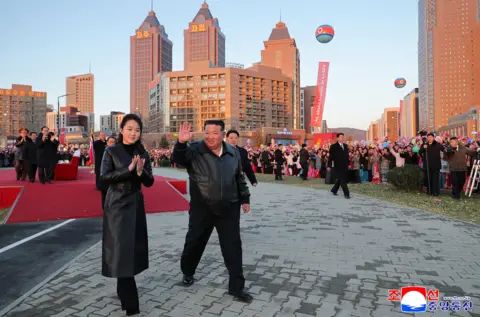
During threats towards South Korea and vows to expand the atomic arms program, a central query lingered at the recent party congress: might the leader's teenage child be named as the successor?
Even though conclusive announcement failed to surface this week, it has sparked a intense conversation about Kim Ju Ae's viability as the future leader of the populous nation, a regime exclusively ruled by the Kim family bloodline.
Heightened Public Profile and Analysis
The young woman has become progressively visible in official broadcasts next to her leader. However, a great deal about her continues to be shrouded in mystery. North Korea has never publicly published her name or verified her date of birth.
She was originally revealed abroad in 2013. Since then, she is commonly estimated to be 13 years old, partly on agency reports.
Evidence of Heir Apparent
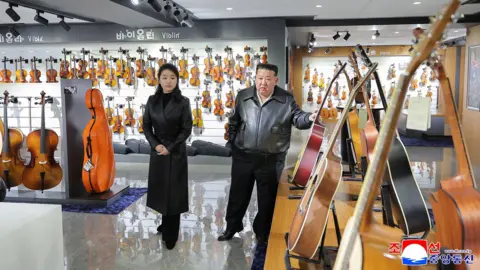
Experts note several notable signs. Her prominent public sightings—often framed in the camera view—and the use of reverential language usually set aside for the supreme leader are seen as clear evidence.
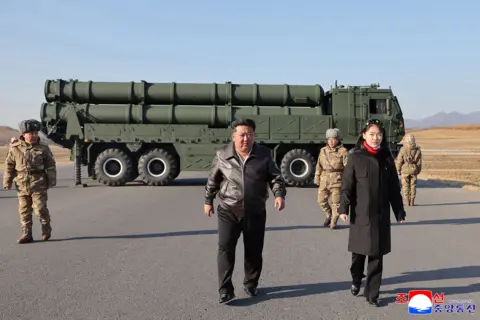
Furthermore, her familiarity with the military is viewed another critical element. She has reviewed troops and weapons with her father. Multiple times, high-ranking generals have been observed stopping beside her to speak during military parades.
"Official broadcasts is utilizing terminology set aside for the leader. It underlines her own cult of personality," states one respected commentator.
This martial indoctrination is deemed crucial, as supreme control in North Korea lies with command over the army. To be a legitimate future leader, she must present herself as a competent figurehead.
Discussion Over Gender and Tradition
Yet, a significant counter-argument persists. Some experts believe that North Korea's deeply patriarchal society presents an insurmountable obstacle for a girl supreme leader.
Observers highlight that women at all level struggle for equal recognition. Female leaders in senior roles are very uncommon. Everyday beliefs also highlight these biases.
"If they do, they complete the trip then go to the rear of their car and expectorate multiple times to dispel the curse," explains a one-time DPRK diplomat.
Changing Cultural Realities
On the other hand, other researchers argue that the status of women in North Korea has evolved dramatically since the 1990s.
During that time, as the state economy faltered, women increasingly became the primary breadwinners, turning to private business. This has apparently led to a perceptible change in societal perceptions.
One expert who has spoken to many escapees suggests that it is now less rare to see females in administrative jobs within the state.

"We must not view North Korea with our logic. We must see them as the ancient kingdom," comments the researcher. "Who would presume oppose an individual of Kim heritage who is assuming the throne?"
Strategic Moves
Latest party appointments are also being watched. The promotion of Kim Yo Jong, the leader's powerful sibling, to a key ideological position is seen by some as a move to install a mentor for the possible successor.
Finally, analysts are split. Some view the spotlight on Ju Ae as a strategic ploy to soften the leader's public persona and prepare the ground for another dynastic transfer of power. Others insist the evidence of her training are too substantial to dismiss.
Regardless, the speculation alone may serve a function for the leadership, maintaining international focus firmly fixed on the isolated Kim family dynasty.


